San Jose Shipwreck Treasure
Love in the Time of CholeraThe treasure of the San José is the fabled cargo of a Spanish galleon sunk at the entrance to the port in 1708. In the novel it joins the city’s lost colonial wealth to Florentino Ariza’s most extravagant fantasy of devotion: recovering the gold so that Fermina Daza can bathe in it.
Cargo and loss
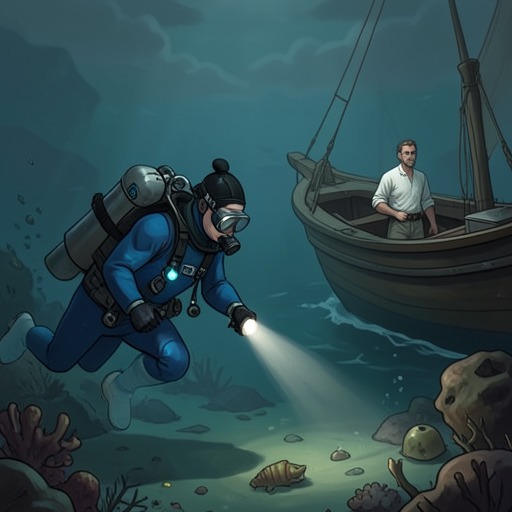
In the city’s eighteenth-century heyday, fleets carrying the riches of Potosí, Quito, and Veracruz gathered in the bay. On June 8, 1708, at four in the afternoon, the San José set sail for Cádiz carrying precious stones and metals valued at five hundred billion pesos in the currency of the time. An English squadron sank it at the port entrance. Two centuries later, the wreck had still not been salvaged.
The treasure’s scale makes the loss more than a story of a ship and its cargo. The city’s former prosperity had depended substantially on its position as the largest African slave market in the Americas. The wealth that passed through its harbor therefore stands beside the violence and exploitation on which that prosperity rested.
A relic of the vanished city
The wreck lies in coral, beyond the living city. Historians evoke both its treasure and the commander’s corpse, floating sideways on the bridge, as an emblem of a city drowned in memories. The image connects material wealth to historical ruin: what once arrived in fleets and sustained a regional center is now submerged, unrecovered, and available chiefly through recollection.
That lost grandeur also unsettles Juvenal Urbino’s nostalgic ideal of the colonial city. Its remembered glory belongs to a past whose prosperity had a human cost, while the present city bears the marks of decline. The wreck condenses that contrast into a single inaccessible deposit: riches survive, but the world that made them valuable has disappeared.
Florentino’s imagined recovery
Florentino first hears of the wreck indirectly. While staying in a hotel, he overhears conversations through adjoining rooms, where important clients and local officials confide secrets to their lovers. One such piece of overheard information places a Spanish galleon four nautical leagues north of the Sotavento Archipelago and describes its cargo as more than five hundred billion pesos in pure gold and precious stones.
The report astonishes him, but he initially gives it no further thought. Months later, when his love for Fermina Daza awakens an overwhelming desire to salvage the treasure, he imagines giving her a bath in showers of gold. The wreck thus changes in his mind from a historical curiosity into a means of extravagant courtship. Its immense value serves a private fantasy, while its long submergence gives that fantasy the scale of a quest that cannot be separated from the novel’s landscape of memory and loss.